 They’ve got penguins in Melbourne. I’m walking along this rocky
outcrop, stretching a hundred yards out to sea to get to where they nest and I
finally get to this wooden gangway where you can see them up close. There are
signs saying, ‘No flash photography – use infra-red instead; penguins don’t
recognise the colour red’ and ‘Don’t climb onto the rocks – this is a nature
reserve’ etcetera etcetera. I turn to see this Frenchman climbing onto the
rocks with a massive camera hanging from his neck...
They’ve got penguins in Melbourne. I’m walking along this rocky
outcrop, stretching a hundred yards out to sea to get to where they nest and I
finally get to this wooden gangway where you can see them up close. There are
signs saying, ‘No flash photography – use infra-red instead; penguins don’t
recognise the colour red’ and ‘Don’t climb onto the rocks – this is a nature
reserve’ etcetera etcetera. I turn to see this Frenchman climbing onto the
rocks with a massive camera hanging from his neck...Wednesday, April 18, 2012
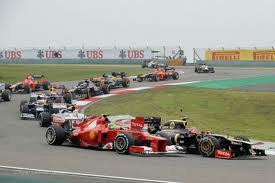
A Conversation About: The Bahrain Grand Prix
They’ve got penguins in Melbourne. I’m walking along this rocky
outcrop, stretching a hundred yards out to sea to get to where they nest and I
finally get to this wooden gangway where you can see them up close. There are
signs saying, ‘No flash photography – use infra-red instead; penguins don’t
recognise the colour red’ and ‘Don’t climb onto the rocks – this is a nature
reserve’ etcetera etcetera. I turn to see this Frenchman climbing onto the
rocks with a massive camera hanging from his neck...

Tuesday, April 17, 2012
Goal-Line Technology Not Welcome in Football
 |
| F.A. Cup confusion |
But, would
this really improve the game of football?
As stated in Law 10 ‘The Method of Scoring’ on page 32
of the official FIFA ‘Laws of the Game’ manual: “A goal is
scored when the whole of the ball passes over the goal line, between the
goalposts and under the crossbar.”
At present, this is a judgement call made by
the referee and assistant referee, whose view is potentially obscured by
players, leading to the belief that introducing technology would eradicate such
issues.
FIFA is
currently testing two potential camera-based methods, including ‘Smart Ball’
and ‘Hawk-Eye’.
The former
refers to balls equipped with censors and magnetic fields around the goal to
give a real-time verdict on whether or not the ball has crossed the line.
 |
| Lampard out of luck |
The latter
system uses triangulation, through six high-speed cameras, only needing to
observe 25 percent of the ball to determine its location, overcoming the
concern of players blocking the line of vision.
However, this
is not real-time and would therefore require stoppages in play for disputed
incidents. Cost of installation has also been estimated at £250,000 for each
stadium to utilise such technology.
In this instance, a greater divide between
the Premier League and the lower leagues would be created, an act which would
be frowned upon by those unable to afford such facilities. It seems difficult to
justify the costs of implementation for a scenario which is relatively rare.
True, most
big-money sports in the modern era take advantage of technology to aid decision
making, including finish line calls in horse racing, swimming and athletics.
Cricket and tennis both use Hawk-Eye for in-line judgements, whilst rugby
employs video referees for dubious try decisions.
To many
general sports fans, football may appear to have been left in the dark ages,
but all dedicated football fans will appreciate the one resounding difference between
their favoured discipline and the others mentioned above.
 |
| Keeper 'saves' a goal |
Football is
the only non-stop sport, whereby breaks in play are few and far between and the
very ethos of the game is based on hard, fast, flowing action. To introduce
lengthy stoppages, interrupting the natural rhythm of the game, would be to
remove the heartbeat of a sport which has survived perfectly well throughout
the ages, without the need for such inclusion.
The most
famous case in recent history occurred in the 2010 World Cup in South Africa,
when Frank Lampard’s 20-yard strike was judged not to have crossed the line,
despite video replays showing the ball was a foot over the chalk.
Sure, England
had reason to feel hard done by, but the fact remains, they were horrendously outclassed
and convincingly defeated 4-1 by much classier opponents. So, rather than being a
decision that changed the outcome of England’s World Cup fortunes, it became an
event that was used as a scapegoat to mask England’s lack of talent.
Similarly, on
Sunday, Tottenham were equally unlucky to have a goal awarded against them,
which never crossed the line. But, despite Chelsea scoring on four other occasions,
in an impressive 5-1 rout, it was the irrelevance of the goal that never was,
which stole the headlines.
As with these
two instances, there would be little to no overall change of the successes and
failures in the football world.
 |
| The 1966 World Cup Final |
The one major
argument in favour of goal-line technology is justice. The problem being, the use
of technology for one scenario creates inconsistencies in others.
For example, a
referee may possess the power and knowledge to award a goal after confirming,
through video replay, that the ball has crossed the line. Yet, if the corner
that lead to the goal should never have been given, because video replays show
the defender never touched the ball, it is impossible to claim justice in this
situation.
The only way
to achieve real justice throughout football is through the total use of
computerised, video-assisted, robotic referees for every single decision, including
throw-ins, free-kicks, corners, goal-kicks, penalties and goals causing
uncountable stoppages and the complete death of the game.
Yes, sometimes
humans get decisions wrong and sometimes they go in your teams favour and
sometimes they do not, but this is part of the game.
Genuine football fans
would agree that half the enjoyment of being a spectator, is the debates that
ensue over the referee’s big calls. As the president of FIFA, Sepp Blatter,
claimed, “Fans love to debate any given incident in a game. It is part of the
human nature of sport.”
 |
| FIFA not keen on cameras |
FIFA have
always claimed their objective is to open up football to the world, a notion
that is made impossible by the undermining of its universality.
The idea of an
ancient sport being replicated all over the planet, promoting ‘jumpers for
goalposts’ football, is removed with the suggested inclusion of complex modern goal-line
technology.
After all,
football is an art, not a science.
Written by Dom Wallace
Written by Dom Wallace
Wednesday, April 11, 2012
A Conversation About: Mario Balotelli
 Queuing up to get into a swanky bar the other night,
shielding my chin from the bitter wind in the top of my coat, when some vagrant
shuffles up to me...
Queuing up to get into a swanky bar the other night,
shielding my chin from the bitter wind in the top of my coat, when some vagrant
shuffles up to me...Monday, April 9, 2012
Stuart Lancaster's England Are a Wilting Rose
 |
| New man in charge |
On March 29th, Stuart Lancaster was named as
permanent head coach of the England rugby team. Following his successful,
although brief, period as interim boss during a Six Nations campaign that saw
England win four out of their five matches, many have been quick to heap praise
on the new boss. However, a more in-depth investigation into the events
surrounding his appointment would suggest that the current optimism in the
English rugby camp may be short-lived.
A woeful World Cup campaign in New Zealand at the end of
2011 will be remembered more for the irresponsible and unprofessional antics of
the England rugby team off the field than their undisciplined and disorganised
behaviour on it.
Unsavoury reports of law-breaking during matches and drunken
misdemeanours between fixtures left Martin Johnson with no option, but to
resign, proving that great players don’t always make great coaches.
The month of mayhem left the reputation of the England Rugby
Football Union in tatters and with confidence at an all-time low, many had pencilled
this year’s Six Nations as a potentially huge embarrassment for English rugby.
Enter Stuart Lancaster.
 |
| A shameful World Cup |
A new-look England squad made heavy work of their opening
two fixtures with narrow victories over Scotland and Italy, although winning
was the most important factor. A spirited performance against Wales, ending in
a controversial defeat, showed signs that Lancaster had moved quickly to change
the ethos in the camp. A memorable victory in Paris and a resounding win over
the Irish at Twickenham further compounded the suspicion that whatever
Lancaster was doing, was working.
The constant flow of penalties that England had conceded under
Johnson, combined with a lack of conviction and identity had been replaced with
a passion, discipline and belief causing players and pundits alike to pay
homage to the impact of Lancaster in his role as interim head coach.
Debates ensued as to who held the credentials to take on the
role of England head coach on a full-time basis and it appeared in recent weeks
that the RFU had narrowed their list of suitable candidates down to Lancaster
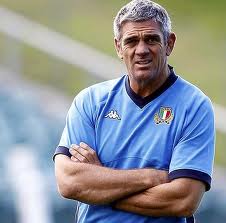
and former South African and Italian head coach Nick Mallet.
 |
| Lack of discipline |
Due to England’s relative success in the Six Nations, many
voiced opinions to suggest that Lancaster should be rewarded for his outstanding
work and when unveiled as the new permanent boss, the news was met with enthusiasm
from the overwhelming majority.
But, was Lancaster the right man for the job and will he
still be regarded as the saviour of English rugby come the turn of the year?
When assessing the calibre of Lancaster’s opposition, it
becomes obvious that the magnitude of Mallet’s achievements far outweigh his
own.
With a coaching career that commenced in 1984 and boasts five
clubs, two national teams, World Cup experience, two French domestic titles, a
Tri-Nations triumph, a claim to raising Italy to the heights of a world-class
rugby nation and a record winning stretch of 17 consecutive test wins with the
Springbok, amongst others, Mallet’s accolades speak for themselves.
 |
| Vastly experienced |
In stark contrast, Lancaster’s coaching career began
recently in 2006 as Director of Rugby at Leeds Carnegie, having run Leeds RFU
Academy for the previous five years.
Former England World Cup winner Ben Cohen admitted, “I don’t
think he’s the right man. Nick Mallet has got credentials coming out of his
ears, he has got a great CV [and is someone] who knows how to react in tough
times.”
In Lancaster’s defence, he has stated in no uncertain terms
that his reign will be one of steady progression, warning against building
expectations too high, too soon. The RFU has moved quickly to back-up
Lancaster, re-iterating that his ultimate mission is to bring success to
English rugby when the 2015 World Cup is played on home soil.
Cohen countered, “Yes...he has got four years to build up to
the World Cup, but you want someone who has got experience of managing through
that. You look at the Six Nations as a honeymoon period and there are testing
times to come ahead.”
Many current England internationals filed rapid responses in
favour of Lancaster’s appointment, although cynics would claim these were acts
of personal gain to get on the right side of a man who disagrees with favouritism.
 |
| Favours Mallet |
England’s Six Nations captain, Tom Croft, announced, “He did
a great job so he is the ideal man to keep in the role. I look forward to
working with him again in the summer, if I am selected.”
A host of ex-internationals seemed to back Lancaster, though
few appeared to speak with real persuasion. Jeremy Guscott revealed, "The
results made it almost impossible not to give him the job. The future for
Lancaster is fairly bright, but we have to keep a lid on the expectation.”
Leicester head coach and former England hooker, Richard
Cockerill, believes, “Stuart is there by circumstance rather than by ambition.”
Ex-England captain, Martin Corry, went further into the
nature of Lancaster’s appointment, suggesting, “I think the process has to be
questioned a little bit. You look at Wayne Smith [former All Blacks assistant
coach], who I regard as a world-class coach. He ruled himself out, saying the
job seemed more like a PR exercise than actually coaching a world-class side.”
Lancaster has emerged from the Six Nations with a glowing
reputation but, as is often the case with sports fans, followers must not be
short-sighted and acknowledge that much tougher tasks lie ahead. In June,
England travel to South Africa for a three match series, before hosting the ‘Big
Three’ southern hemisphere teams and Fiji at Twickenham this winter. There is a
real possibility that England will walk away from the next seven fixtures with
just one victory.
 |
| Tough tests lie ahead |
Even former England hooker Brian Moore, overtly vocal in his
support for Lancaster, conceded, “They have got southern hemisphere games that
they are likely to lose and it will not be a straightforward path.”
In December 2011, the English were in a state of despair
with their national rugby team, given their failure to conduct themselves
appropriately on and off the pitch. Four months later, this appears to be a
distant memory as the media misrepresents a small step as a giant leap in the
revolution of English rugby.
While the outcome of the last five games was a pleasant
surprise for most fans, three narrow victories and one comfortable result
against a diminished Ireland side, is not enough to convince most realists that
England are a transformed outfit.
Given that they face the possibility of several heavy losses
before the end of the year, it will be interesting to see whether the public
still believe in a highly inexperienced head coach as the right man to lead England
come December 2012.
Stuart Lancaster’s red rose has weathered the first storm,
but must withstand some treacherous conditions before it has the chance to
bloom.
Written by Dom Wallace
Written by Dom Wallace
Thursday, April 5, 2012
A Conversation About: Tiger Woods

Tuesday, April 3, 2012
A Conversation About: Fabrice Muamba
 I’m swishing about in the bath last night and I hear this
voice, only a little voice, calling to me from somewhere but I look around and
there’s no-one there so I carry on soaking, getting nice and relaxed but the
voice comes back. And I realise it’s the rubber duck and he’s asking me about
Fabrice Muamba...
I’m swishing about in the bath last night and I hear this
voice, only a little voice, calling to me from somewhere but I look around and
there’s no-one there so I carry on soaking, getting nice and relaxed but the
voice comes back. And I realise it’s the rubber duck and he’s asking me about
Fabrice Muamba... Sport 4 Thought Presents New Guest Writer
 |
| Andrew Hatch |
Sport 4 Thought has made an incredible impact in 2012 claiming
3,000 hits since launching two months ago and in order to accommodate such a
rapidly increasing audience, I am delighted to present a new guest writer to
the world’s premier sports blog.
Andrew Hatch is an experienced writer and avid sports fanatic who combines his limitless knowledge of sporting trivia with a unique style of prose to compose compelling, thought provoking pieces.
Andrew’s writing will offer an alternative view on hot
topics in the sporting world and his series entitled ‘A Conversation About’
will be a regular feature of the new-look Sport 4 Thought blog.
Written by Dom Wallace
Written by Dom Wallace
Thursday, March 29, 2012
Tiger Woods in the Rough is Great to See
The long-running Tiger Woods saga has been saturated with more drama than your average soap opera. Woods, once a superstar golfer, lost everything in a flash and is now on an epic journey to claim back not only his status on the course, but his reputation off it.
 |
| Tiger's first Masters victory |
We have witnessed Woods' rapid rise to stardom with success at a young age, a battle with career-threatening injuries, a scandal that rocked the world, deep remorse and acknowledgment of previous faults, which leaves only one missing scenario — a fairytale ending.
Tiger, one of the United States' most famous embodiments of the American Dream, must now seek to emulate his initial rise to greatness once again, and this resurgence mission gathered great pace on Sunday.
Shooting a 13-under par 275 at Bay Hill to claim victory at the Arnold Palmer Invitational by a 5-shot margin, Woods claimed his first PGA Tour victory since September 2009 at the BMW Championship to draw a line under what has been the lowest point of his career.
It all began when he crashed his Escalade outside his home in November 2009, but got worse with numerous reports of infidelity, a high-profile divorce, public defamation by former caddie Steve Williams and a damning description of events in former coach Hank Hanley’s recently published novel.
 |
| Doomed to fail |
Woods hit rock bottom in sensational fashion with arguably the biggest public fall from grace of any superstar past or present. But, he is determined to prove that his troubled times are over and that such misdemeanours are a thing of the past.
Tiger Woods' attempts to bring himself full circle in an unbelievable restoration of faith and fortune is the sequel to his incident-filled first episode, and the setting for his latest chapter is Augusta.
The Masters is a modern representation of a reality show, incorporating drama and comedy in an action-filled adventure towards the capture of the romanticised green jacket. Taking the stage, Woods, who has, up until last weekend’s victory, been considered unlikely of success, will enter the tournament as 3/1 favourite.
He will understand that he has much improved competition at The Masters, especially in the form of Rory McIlroy, who won the U.S. Open last year — the youngest player to do so since Bobby Jones in 1923. McIlroy boasts a longer stretch of form and recently held off Tiger’s dramatic surge of a last-round 62 to claim victory at the Honda Classic in Florida.
At the other end of the scale, 41-year-old veteran and psoriatic arthritis sufferer Phil Mickelson will also pursue Woods. Mickelson, inducted into the World Golf Hall of Fame last year, is a three-time Masters champion, who claimed his 40th PGA Tour victory last month in the ATT Pebble Beach Pro-Am and knows Augusta inside out.
 |
| McIlroy will be biggest threat |
The Tiger Woods show lacks traditional themes, for he is no hero and does not chase villains, but it is by far the most eagerly anticipated programme on the PGA’s listings and Woods’ recent victory has sent media speculation into overdrive.
Whether Woods manages to secure his fifth green jacket at Augusta or not, The Masters will benefit just from his presence. When he missed the 2011 U.S. Open in Bethesda, Maryland, due to injury, ratings fell by a staggering 26 percent, illustrating just how influential his participation is on spectatorship.
So as the viewing public prepares to witness the next chapter of the Tiger Woods chronicle, there are two main schools of thought among the audience.
Some brand Woods as a golfing genius who must be given the plaudits he deserves for his achievements on the golf course — because this is the reason people grew to love him — and believe his "private" life is none of our business.
 |
| Is this how it ends? |
Others see a man who betrayed not only his wife, but the public, who heaped adoration on Woods, helping him to become the iconic figure that he was, and feel a person so morally bankrupt as he appears to be deserves little respect after such transgressions.
Whether you see the good in a man who has trodden a long path of repentance to seek forgiveness for his sins, or the evil in a man who committed crimes so drastic they cannot be forgiven, one fact remains: Golf with Tiger Woods is a must-see event.
Written by Dom Wallace
Tuesday, March 13, 2012
Why Messi Isn't The Greatest Ever
Lionel Messi registered a record-breaking five goal haul last Wednesday, as a boisterous Barcelona swept aside a baffled Bayern Leverkusen outfit, to march promptly into the Champions League Quarter-Finals.
 |
| Barcelona's old No.10 |
Messi once again exhibited his undeniable quality and complete understanding of the modern game, bringing to the boil the debate that has simmered under the surface since he adopted Barcelona’s number 10 shirt from the majestic Ronaldinho in 2008.
That season saw a 21-year old Messi score 38 goals on his way to claiming La Liga, Copa del Rey and Champions League trophies and the youngest top scorer in Champions League history picked up the UEFA Club Forward of the Year and UEFA Club Footballer of the Year awards, coming runner-up in the 2008 FIFA World Player of the Year.
Having received a staggering 46 accolades since then, netting another 153 times in just 157 appearances for Barcelona, Messi has proven to football spectators worldwide that he is a truly unique talent.
But, is Lionel Messi 'The Greatest Footballer Ever'?
Last May, Wayne Rooney was helpless to prevent the Argentine running rings around his teammates at Wembley, once again crushing his dreams of Champions League success. Despite such a brutal infliction of pain, Rooney found only pure pleasure in observing Messi’s latest masterclass, tweeting “Messi is a joke. For me the best ever.”
 |
| Messi makes it look so easy |
When talking of all-time greatest footballers the same names inevitably arise such as Pele, Cruyff, Maradonna, De Stefano, Puskas, Beckenbauer, Platini, Eusabio, Francescoli and Best.
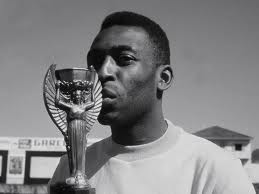
Having scored a mind-blowing 1,283 career goals in 1,363 appearances, Pele is considered by many as the number one footballer ever, when forced to choose. The so-called ‘King of Football’, who famously quipped, “I was born for soccer, just as Beethoven was born for music”, has his own views on whether Messi is eligible for the title of ‘Greatest Ever’.
In January Messi scooped the FIFA Ballon D’or award for the third successive year and Pele was present at the ceremony to admit, “I like Messi a lot, he’s a great player. Technically we’re practically at the same level.”
However, the Brazilian legend asserted, “When Messi’s scored 1,283 goals like me, when he’s won three World Cups, we’ll talk about it.” He further clarified, “He’s a great player for Barcelona, but when he plays for Argentina, he doesn’t have the same success.”
 |
| Maradonna is an admirer |
The 71-year old global football icon displayed his sense of humour, claiming “People always ask me: ‘When is the new Pele going to be born?’ Never. My father and mother have closed the factory.”
Joking aside, Pele makes a valid point given that his 77 goals in 92 international appearances, including three World Cups and countless international records vastly outweigh Messi’s 22 scores in 67 games, boasting only one tournament victory in the 2008 Olympics.
Messi supporters would argue that at 24 years of age, assuming he remains injury-free, he will have every opportunity to meet and exceed the numerous achievements made by the Brazilian.
This statement holds great truth and it is impossible to construct arguments that successfully derail the assertion of Messi as the ‘Best Player of the Modern Era’.
As a generation we must acknowledge how privileged we are to witness such aristocratic displays of ingenuity on the football field.
We must also recall that our knowledge of Pele’s greatness is formed from vivid recollections passed down by those fortunate enough to have seen him perform or through rare clips of his wizardry, but primarily from reading of his accomplishments statistically.
 |
| Still the greatest... for now... |
Granted the wealth of modern technology enables us to chronicle Messi’s career in a more comprehensive manner, but when the final whistle blows the bare bones of a legendary striker’s career is exposed through numbers.
Lionel Messi is an exceptionally gifted talent who has the world at his feet, but his sensational career record of 254 goals in 384 games still falls tremendously short of Pele’s, who can rest assured, temporarily, that he remains 'The Greatest Footballer Ever’.
Written by Dom Wallace
Written by Dom Wallace
Tuesday, March 6, 2012
Who Dares Cross the Bridge?
 |
| An unhappy ending |
With Andre Villas-Boas becoming the seventh manager to lose his job since the Roman Abramovich regime commenced in 2003, speculation surrounds who is being lined up to cross the bridge that has seen so many stumble and fall. The following candidates top the Chelsea wish list:
JOSE MOURINHO – 49, Real Madrid
 |
| The main target |
‘The Special One’ is the players and fans favourite to return to Stamford Bridge, where he previously won six trophies, including two Premier League titles, crowning him Chelsea’s most successful manager ever.
Mourinho has made no secrets of his desire to return to the Premier League and amidst rumours of increasingly strained relations with Real Madrid’s big name stars, he was spotted house-hunting in London last week.
However, with Arsene Wenger’s job in the balance at Arsenal and the possibility of Harry Redknapp trading Tottenham for England, the media frenzy has flown into overdrive.
Mourinho has also been linked with both Manchester clubs, although with Man City’s current form and Sir Alex Ferguson’s good health, these posts are showing little sign of availability.
With a history of achieving his goals and moving swiftly on, Mourinho has suggested his next visit to England will be in a long haul capacity, citing Ferguson’s reign as inspiration.
The problems at Chelsea cannot be immediately resolved and the Chelsea faithful will be hoping this is the perfect project for him to take on with his experience and deep-rooted love for the club.
Although there would be the small task of resolving ‘philosophical differences’ with Abramovich...
PEP GUARDIOLA – 41, Barcelona
 |
| Highly regarded |
Despite boasting the capture of every possible trophy as both player and manager at Barcelona, Guardiola has always kept his options open, only ever signing one-year contract extensions.
He openly admits a fondness of Premier League football, expressing a desire to tackle alternative cultures and if Barcelona win their third Champions League title in four seasons this year, it might be a perfect way to move on.
However, with Real Madrid looking favourites to win La Liga, this would be considered a low point and it remains hard to see him parting company with what is arguably one of the greatest football outfits of all-time.
Does he really want to confront the headache of a floundering Chelsea team in desperate need of refurbishment - a role offering an average shelf life of under 12 months?
RAFAEL BENITEZ – 51, Unattached
 |
| Controversial choice |
Most short-term memories of Benitez are not particularly impressive, with an unsuccessful short-lived spell at Inter Milan and a troubled time prior to his departure at Liverpool.
Those whose football knowledge extends further than this will vouch for Benitez and his tactical shrewdness which saw a prosperous tenure at Valenica before guiding Liverpool to Champions League success in 2005 and running Manchester United close for the Premier League title in 2008/09.
Benitez has the experience of winning the Champions League, the trophy that Abramovich so desperately wants to capture and also has the ability to get the best out of fellow Spaniard Fernando Torres who has so-far flopped at Chelsea since his £50M transfer.
The biggest issue with this appointment would be how the Chelsea fans would greet a man who they associate with relative failure at Liverpool. Benitez was also a hate figure for Chelsea fans during his time at Liverpool following controversial Champions League semi-finals in 2005 and 2007.
This will not concern Abramovich, though he may do well to remember the sour relationships Benitez formed with board members at Valencia and Liverpool, concerning his campaign for increased control of transfers.
FABIO CAPELLO – 65, Unattached
 |
| Outsider |
Recently standing down from his post as England manager, Capello has reappeared on the market and may offer Abramovich just what he needs.
Capello is hard-headed and refuses to be flustered by big egos and the diva-like behaviour that seems to accompany modern football’s superstars.
A Champions League victory with AC Milan over Barcelona in 1994 and domestic success in Spain with Real Madrid combine with his role as England manager to complete an extremely well-rounded CV.
Capello in an unemotional figure who always put the team’s fortunes ahead of personal battles and this could be the refreshing approach that Chelsea are in need of.
ROBERTO DI MATTEO – 41, Chelsea (Caretaker)
 |
| A passionate figure |
Still popular at Stamford Bridge, Di Matteo is most notably remembered for his two FA Cup-winning goals for the Blues in 1997 and 2000.
Di Matteo is currently installed in a caretaker position and has recruited fellow ex-Chelsea midfielder Eddie Newton to form a management duo that aims to use knowledge and passion for the club, which seems to have lost all sense of identity, to turnaround their old employer’s fortunes.
Di Matteo had a successful role at Milton Keynes Dons and started brightly at West Bromwich Albion before a rapid decline in form saw him relieved of his duties less than a year into his contract.
Di Matteo is unlikely to carry this role any further than the end of the season, although if he were to guide Chelsea to the much coveted fourth position or even mastermind a victorious cup campaign, Abramovich may be persuaded that someone with long-standing ties to the club is the answer to the new revolution.
 |
| A self-inflicted headache |
Whether any of these candidates are available or suited for the role is debatable but one certainty remains. Whoever Roman Abramovich chooses, we can safely assume the next appointment will be made on the basis of experience and not potential.
Written by Dom Wallace
Written by Dom Wallace
Thursday, March 1, 2012
Redknapp Can't Rescue English Expectations
On Wednesday night England conceded three goals at Wembley for the first time since 2007, heaping more misery on the national team’s build-up to Euro 2012. Still void of a manager and with the tournament only 14 weeks away, the outlook for the England football team is grim at best.
 |
| Robben goes Double-Dutch |
Stuart Peace was employed in a caretaker role as England’s lack of class was once again highlighted by a Dutch side who never really hit fifth gear. Cruise control was enough to steer past an England side whose late double was unable to derail the World Cup finalists.
As the FA continue deliberating over the appointment of a new boss for Euro 2012, the vast majority of English fans only have one suggestion.
That man is Harry Redknapp.
Whilst it is hard to disagree that he holds the best credentials for the job, it would be a huge mistake for both the FA and Redknapp to appoint him.
 |
| Fan's favourite |
It seems the expectations are for Redknapp to waltz into the camp and totally transform the English team’s fortunes. He has admitted an interest in taking on the role, but the timing is surely so wrong for all parties involved.
Yes, Redknapp’s Tottenham have played the best football in the Premier League this season, but this would not necessarily transfer to the national side and he would not want to jeopardise all the progress he has made at White Hart Lane.
As for the FA, the pressure remains to recruit successfully and although these are desperate times, patience could be the virtue they require. If England fail to perform at Euro 2012, appointing Redknapp now before the disappointment would further tarnish their reputation.
However, appointing Redknapp after Euro 2012, whether successful or not, would bring great energy to the build up to the World Cup in 2014. The current youthful England squad has a lot of potential stars and by 2014 it will undoubtedly be a greater force than at present.
 |
| Capello fell from grace |
Let us not forget that a popular Fabio Capello was named BBC’s Sports Coach of the Year for England’s successful qualifying campaign prior to the World Cup in 2010, praised for his disciplinary skills and rewarded with a contract extension.
Such is the cut-throat nature of modern management, that just several weeks later, due to a pathetic display by the English players in South Africa, the fans were calling for his head.
I have no doubts Redknapp will manage England one day but now is not the right time. He surely does not want to risk people doubting his ability before he has had a chance to prove himself.
There has been so much controversy surrounding an England side lacking an abundance of raw talent, that their chances of success at Euro 2012 are slim.
So,does it really matter who is in charge?
True, Harry Redknapp is the only fit contender for this post but even he is not a miracle worker. It will take time to reinstall the relevant mindset and beliefs that are required for success with England's national team.
 |
| Familiar disappointment for English fans |
Just as important as the manager is the quality of the players, which in England’s case is somewhat lacking. A midfield of Gerrard, Parker, Barry and Johnson is non-comparable to Spain’s Xavi, Iniesta, Silva and Fabregas.
The biggest fear for English football fans should not be who will manage the team at Euro 2012, but how they will manage their own expectations.
Supporting your country wholeheartedly is what these tournaments are all about, but English fans must learn to be realistic. Whether Harry Redknapp leads England to Euro 2012 or not, they must not expect to win.
Written by Dom Wallace
Written by Dom Wallace
Thursday, February 23, 2012
In Arsene We Trust?
Arsene Wenger’s 16-year reign as Arsenal manager is at an all-time low and the steady decline of a previous powerhouse of English football has now reached crisis point.
 |
| Tough times for Wenger |
In the space of four days Arsenal have been dumped out of the FA Cup by a mediocre Sunderland side and emphatically thrashed by AC Milan to all but end their hopes of progression in the Champions League. Sitting 17 point adrift of league leaders Manchester City they have little to play for and facing a seventh straight season without a trophy, some supporters are now suggesting Wenger’s time is up.
The Gazzetta dello Sport described Arsenal’s 4-0 thrashing by AC Milan in the San Siro, their heaviest ever European defeat, as “Una delusione totale” which requires little translation. Ex-captain Patrick Viera was quick to defend his old boss, stating on Twitter, “There was a lack of leadership, you cannot blame only Arsene, the players must take some responsibility.”
 |
| Embarrassed in Milan |
Not many expected Arsenal to win in a tough away fixture to a side that currently tops Serie A, but this was not just a loss. Wenger admitted, “The result is a disaster, although the season is not finished… We need to show something completely different on Saturday.”
There were many differences in the game on Saturday, the most noticeable being the quality of Arsenal’s opposition, but the outcome was the same. Granted they were unlucky at times, but in what former midfielder Emmanuel Petit classified as the worst season of Arsene Wenger’s career, he pinpointed their problems. “They’re playing like they don’t know what’s going on… Mentally they’re very weak.”
 |
| Arsenal hit rock bottom |
Wenger claimed, “We had a lot of possession, didn’t create a lot…” His methods have been criticised in the past for promoting style over substance and Highbury hero Dennis Bergkamp was quick to acknowledge that “Sometimes you need more of a winning mentality than a passing mentality… I’m not sure if Arsenal have enough of that.”
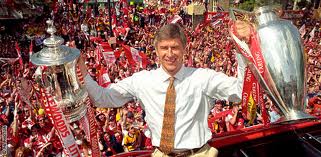
Arsene Wenger, labelled a “miracle worker” by former vice-chairman David Dein, won the double with Arsenal in 1998 and 2002. He became the only manager ever to achieve an unbeaten season in the Premier League in 2004 and reached the Champions League Final in 2006.
 |
| Duo are so badly missed |
This success was built around experienced players and big characters, who gave Arsenal a ruthless sense of drive and determination. Think Seaman, Adams, Keown, Viera, Petit, Henry and Bergkamp among others. Now compare this to a current Arsenal outfit, which, aside of Robin Van Persie, struggles to boast a single outright leader.
Wenger has become widely known for his failure to bring in big name signings and his inability to hold on to his top talents. This season Arsenal lost the services of two of their outstanding players in Cesc Fabregas and Sami Nasri who moved onwards and upwards to Barcelona and Manchester City respectively.
Speculation continues to surround the future of Van Persie, who is still yet to sign a new contract and if Arsenal fail to qualify for next season’s Champions League, they would surely be waving goodbye to the man who has single-handedly dragged them up to fourth in the league table.
 |
| Arsenal's only hope |
Having signed five players in a frantic final 48 hours of the last transfer window, none of any notoriety, Arsenal fans have been left once again to wonder why Wenger, a Master of Economics, refuses to spend the money that chief executive Ivan Gazidis announces is available for transfers.
Petit stresses, “They have to spend money to get the big names.” But with the possibility of no Champions League football next year and the lack of willingness to offer lucrative contract deals such as in the case of Manchester City, Chelsea and Manchester United, Arsenal may be facing a dilemma of not being able to attract top class footballers.
To add insult to injury, Arsenal’s apparent decline appears to be coinciding in perfect unison with the rise and rise of bitter rivals Tottenham Hotspur.
 |
| Tottenham flying high |
Third in the league, still in the FA Cup and playing the most attractive football in England, Harry Redknapp’s men are taking great delight in the shift of footballing fortune in North East London.
In contrast to Arsenal, Spurs have been able to retain their best players in Gareth Bale and Luka Modric and bring in proven talent such as Rafael Van der Vaart and Emmanuel Adebayor. One of Europe’s hottest prospects Eden Hazard also recently expressed his desire to ply his trade at White Hart Lane.
Arsenal have won only five of their last ten Premier League matches and scoring only twice, they have conceded six goals in their last two competitive outings. With the next three fixtures lining them up against Tottenham, Liverpool and AC Milan, the outlook is bleak.
A team void of any confidence, have a manager in Wenger who openly admits, “It’s very difficult to say where it leaves us and what we will do.”
 |
| The glory days are a distant memory |
Whilst many have lost faith in the man who brought such success to the club in his early years, there is no hiding behind the facts. Arsenal have finished in the top four of the Premier League in every single season since Wenger arrived in 1996. They have also been involved in the Champions League 14 years in a row under Wenger, despite having only 12 European ventures in total previous to his tenure.
Petit believes “Arsene is still the solution” and many fans maintain faith in a man who has done so much good for Arsenal Football Club, but it is impossible to ignore the doubt in the voices of Wenger’s followers as cries of “IN ARSENE WE TRUST” are replaced by murmours of “In Arsene we trust?”
Written by Dom Wallace
Written by Dom Wallace
Subscribe to:
Posts (Atom)